

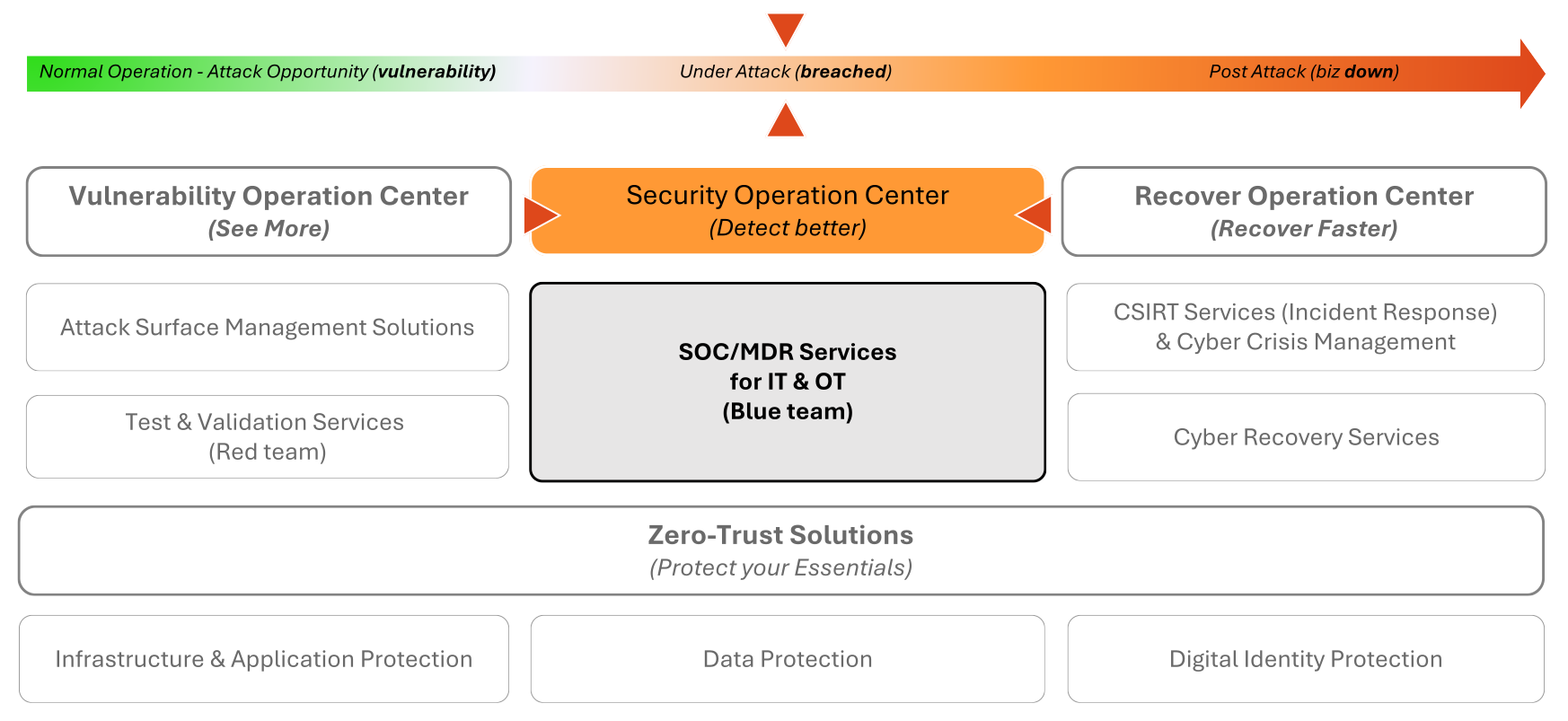
Detect better. Stop adversary.
Threats don't wait for business hours. Our Security Operation Center monitors your IT and OT environments around the clock — detecting intrusions the moment they bypass your security controls and responding before damage spreads.
SOC Maturity Assessment
Use Cases
Know where your Security Operations Center stands today — and where it needs to go. Our structured assessment gives you an independent, evidence-based view of your SOC's strengths, gaps, and a clear roadmap for improvement.
Services Features
🚨 Built on SOC-CMM — the industry-standard model for SOC excellence
We use the SOC Capability Maturity Model (SOC-CMM), a globally recognized open framework designed specifically for Security Operations Centers. It evaluates maturity and capability across five domains and 26 aspects, providing a structured, objective, and repeatable measure of SOC performance — aligned with the NIST Cybersecurity Framework.
- Business Governance, strategy, and organizational alignment
- People Skills, roles, staffing, and training
- Process Detection, triage, response, and escalation procedures
- Technology Tooling, integrations, and automation
- Services Detection and response service delivery
A clear, six-level scoring model
Each domain is scored on a maturity scale from 0 to 5, from ad hoc and undocumented operations up to a fully optimizing, continuously improving SOC. Capability dimensions are scored separately on a 0–3 scale for technology and services.
0Non-existent > 1Initial / informal > 2Defined / documented > Y3Managed / measured > 4Quantitatively managed > 5Optimizing
🛡️ Designed for SOC operators and service providers alike
Organizations with an internal SOC
- Benchmark your SOC against industry peers
- Justify security investments to leadership
- Prioritize improvement initiatives
- Demonstrate continuous improvement to stakeholders
MSSPs & MDR providers
- Validate and differentiate your service quality
- Identify gaps before clients do
- Build a structured service improvement roadmap
- Demonstrate maturity to prospects and auditors
💡Actionable insight, not just a score
- An independent maturity score across all five SOC-CMM domains and 26 aspects
- A benchmarked view of where you stand relative to industry best practices and peer organizations
- Identification of your SOC's critical strengths and highest-priority gaps
- Tailored recommendations across people, process, and technology with phased quick wins and long-term initiatives
- A NIST CSF mapping of your results for compliance and governance alignment
- An executive-ready report to communicate findings to leadership and stakeholders
Micro SOC Services
Use Cases
Target SMBs from 10 to 100 endpoints/users.
Services Features
This service is under creation and will be provided through a packaged offer made specifically for SMBs.
Enterprise SOC Services
Use Cases
The concept of an Integrated SOC moves beyond the traditional model of simply aggregating logs with a legacy SIEM with a volume or processing-based consumption model (Sentinel, Splunk, etc.). It is defined as a unified, continuously adaptive security hub that converges several critical capabilities:
- Unified Data Aggregation: It merges traditional SIEM (log collection) with XDR (Extended Detection and Response) powered by CTI (Cyber Threat Intelligence) to ingest telemetry across endpoints, networks, cloud, applications and identity layers into a single pane of glass for threat detection
- Continuous Exposure Management: It integrates our VOC modules to form a CTEM platform which provide real-time visibility into vulnerabilities and the potential impact of emerging threats, shifting from reactive monitoring to proactive risk reduction.
- AI-Driven Automation: It leverages AI SOC Agents to automate repetitive tasks like triage, enrichment, and reporting. This allows human analysts to focus on complex investigations and decision-making, addressing talent shortages without sacrificing depth.
- End-to-End Workflow with SOAR: It creates a cohesive loop from detection to remediation, breaking down silos between different security tools and vendors to enable faster response times in hybrid, multi-vendor environments.
In short, the Integrated SOC is not "just" a monitoring center limited to a set of integrated features (CTI, SIEM, XDR, SOAR), but a full technology stack built as an orchestration engine that blends human expertise with AI automation and broad data visibility to manage the entire security lifecycle from data ingestion up to threat response. This smart engine is enriched with a set of SOC/MDR (Managed Detection and Response) services delivered by Senior analysts and incident responders.
Since 2019, we've been at the heart of the SOC/AI evolution with Secureworks, moving from a traditional SIEM-based approach (legacy CTP platform from 2011), to TDR (2019, TaegisTM creation as the first XDR) and XDR, up to the ISOC concept (depicted by Gartner in 2026) powered by TaegisTM SOC platform.
Platform Features
SOC Platform > core
TaegisTM multi-tenant SaaS open ISOC platform allows agnostic data ingestion and normalization from +350 sources in its SIEM backend, natively. TaegisTM has the most comprehensive integration with Microsoft product eco-system to offer a complete SOC/MDR for Microsoft, if relevant.
Taegis offers 1 year of hot data retention by default, and up to 5 years as an option. Customers can enable log archiving in their own S3 bucket at no additional cost.
The platform is powered by Secureworks/Sophos CTI and +25 detection engines (IoCs, detection rules, Yara rules, Tactic-GraphTM multi-source correlation rules, ML engines) to optimize the signal/noise ratio (events grouping, AI scoring based on the local context) and generate alerts/detections that are already enriched by internal and external sources to accelerate the analyst triage.
A case management system is embedded to ease the incident analysis from the genesis alert/detection, allowing evidence collection powered by an advanced search engine (CLI, GUI, AI LLM), drafting the key findings, adding all entities into a full entity graph, and showing the incident timeline. Collaboration between team members and the analyst team (and product support team) is supported by an embedded chat and investigation comments to track and trace all exchanges and decisions taken during the lifetime of the incident.
The automation and orchestration module (SOAR) is providing the notification, enrichment, and response playbooks from +150 templates. SOAR playbooks can be triggerred manually (from alerts or investigations), automatically, or even scheduled, based on your selected criteria.
Last but not least, TaegisTM provides by default report templates and multiple dashboards (security posture, etc.) as well as a native Power BI and Jupyter integration with open API to build your own integration with external tools.
💡 Commercial Model
- From the licensing standpoint, Taegis SOC platform (and services) are solely based on the size of your IT environment as per the number of endpoints (physical or virtual, equipped with a supported EDR). Network and cloud assets are not licensed, but can be integrated without any constraints related to the processing or storage requirements.
SOC Platform > add-ons
The following modules, described as embedded options from the same technology provider, can be added to the core SOC platform (and services) and managed from a single pane of glass:
- Endpoint Detection & Response (Sophos EDR light and full agent included de facto, most of the other major EDRs supported natively)
- Network Detection & Response (Managed NDR/IDPS appliances up to 10Gbps throughput, inline or monitoring mode)
- Vulnerability Detection & Response (VDR module)
- Identity Threat Detection & Response (ITDR module)
Additional options can be considered as part of the Abilene SOC solutions portfolio:
- EMail and Phishing monitoring
- Advanced Network Deception sensors (Anantis TrapEye)
- Advanced Cloud Detection & Response (Sysdig)
- Advanced VOC platform and services from Abilene
- Additional Threat Intelligence IOC feed, Brand/VIP Protection, External Attack Surface Management from our VOC pillar (CybelAngel)
Services Features
SOC/MDR Service > core
We provide 24x7x365 MDR services as a shared SOC service, solely based on TaegisTM ISOC platform.
🔍 What's included
- Triage/validation of high & critical detections/alerts
- Incident investigation with evidence collection, impacted assets, key findings summary, and remediation plan suggestion
- Proactive response actions to mitigate threats (endpoint isolation, IP flow blocking, Account disablement or password reset, etc.)
- 60-minute SLA (1 mins to detect, 30 mins to investigate, 5 mins to respond SLO)
- Real-time collaboration with the SOC team through the platform-embedded chat
- Unlimited remote incident response for major incidents
- Monthly proactive threat hunting campaign to anticipate emerging threats (175+ threat groups monitored)
- Named customer success manager and monthly to quarterly service performance review
- Same features and business model as our core SOC services
- Coverage beyond Microsoft — endpoints, network, cloud, identity — from a single open platform promoting segregations of duties
SOC/MDR Service > add-ons
Additional services can be considered on top of the SOC/MDR core services:
🧠 Technical Account Manager (TAM)
The TAM is a designated cybersecurity technical advisor and primary point of contact for Taegis customers, offering in-depth expertise on Sophos/Secureworks products and services as well as the major
cybersecurity solutions in the market. The TAM works closely with the customer's team to understand their specific SOC needs and help them optimize their use of the Sophos/Secureworks solution,
interfacing with Sophos/Secureworks service managers as the customer solution architect and advocate. The main roles and responsibilities of a Sophos TAM are as follows:
- Trusted Advisor
The TAM acts as a trusted cybersecurity advisor, providing information and recommendations to help customers maximize the value of their Sophos/Secureworks investment.
- Primary point of contact for technical advisory
The TAM is the primary point of contact for all technical questions related to Sophos products and services, facilitating communication, solution architecture, and problem resolution. The TAM augments the XDR Basic Application Support that you can get through the Taegis live chat and will proactively advise on new product features that might be relevant in the customer context.
- In-depth understanding of the customer's environment
The TAM takes the time to understand the customer's specific security environment, needs, and day-to-day operations, enabling them to provide personalized and relevant advice. TAM service will complement MDR service by ensuring a close follow-up and continuous improvement of the Taegis solution (platforms and services) against your evolving context and the dynamic threat landscape
- TAM Scope of work
- 8x5 (CET time zone) premium support in French and English
- Monthly meeting with the customer-designated Security Operation Manager
- Active participation in the monthly/quarterly service (MDR, IMR, ELITE) review
The TAM is subscribed as a yearly retainer of (10) Service Units (50 hours) and can support additional activities based on in-scope capabilities depiected in the service description (custom parser, response playbook, Taegis healthcheck, Taegis training, vulnerability management operation, etc
🛡️ Enterprise Elite Threat Hunting
Assigns a designated threat hunter to proactively identify stealthy threats bypassing automated detection — combining continuous human-led hunts, deep Taegis XDR analytics, and tailored threat hunting missions as a seamless extension of the customer's security team.
🛡️ Enhanced Enterprise SOC Services
Adds a designated 24/7 SOC team (shared by a maximum of 3 customers) on top of the standard core services, providing deeper investigation context across all data sources, phishing investigation, orchestrated remediation, and governance advisory — delivering a fully managed SOC-as-a-service experience for organizations requiring hands-on, specific analysis and incident response workflows. The enhanced SOC team is an extension of your internal SecOps team.
Enterprise SOC Services for Microsoft
Use Cases
Based on our core SOC/MDR service, it acts as a fully managed SOC layer on top of your existing Microsoft security stack — extracting maximum value from Microsoft licenses you already own, such as Business Premium or E3 (not an exhaustive list), without necessarily moving to E5. It is ideal for organizations heavily invested in the Microsoft ecosystem that lack internal SOC capacity to operationalize Defender fully — getting expert-managed, enterprise-grade coverage without abandoning or duplicating their existing stack.
We do NOT operate Sentinel as our core SOC platform, which helps avoid vendor lock-in and strategic independence, while enabling open integration with non-Microsoft sources. The economic model is not based on volume ingested and/or processed and/or stored (Gb/day), which will bring predictive security budget (vs cloud budget) and will avoid segregation of sources (impacting the volume ingested/processed/stored = ++costs) that can be important for the detection of a forensic perspective.
Services Features
🔍 What it ingests
- Microsoft Defender Suite — Defender for Endpoint, Identity, Cloud Apps, Office 365
- Azure — Azure AD, Azure Monitor, cloud workload telemetry
- Microsoft Sentinel — log analytics, SIEM alerts and custom detection rules
- M365 — email, Teams, SharePoint activity and threat signals
🧠 How it works
- All Microsoft telemetry flows into Taegis, where machine learning, behavioral analytics and CTU threat intelligence correlate signals across the full environment — reducing alert noise (by x5) to actionable, high-priority cases in a single-pane of glass (vs multiple Microsoft consoles)
- SOC analysts (supported by Microsoft MVPs) investigate detections 24/7 on the same Taegis console the customer sees — enabling real-time co-investigation via live chat in under 90 seconds.
- No rip-and-replace — enhances Defender (and Sentinel if you wish to keep an Hybrid Scenario or for specific use-cases such as SAP where we recommend Sentinel) rather than replacing them, protecting existing Microsoft license investments.
🛡️ What's included
- Same features and business model as our Enterprise SOC services
- Coverage beyond Microsoft — endpoints, network, cloud, identity — from a single open platform promoting segregations of duties
💡 Commercial Model
- The subscription is based on the number of endpoints only, and not associated with any form of storage or processing consumption (Sentinel or any other SIEM model)
Enterprise SOC Services for OT
Use Cases
Bring specific and converged IT+OT threat monitoring, detection and investigation under a single platform — delivering 24/7 coverage by OT-specialized security experts, native integrations with OT cybersecurity agents and sensors, NDR appliances between IT and OT landscapes, and providing collaborative SOC escalation playbooks purpose-built for critical environments (OT, IoT, IoMT).
This service is ideal for organizations operating critical infrastructures — manufacturers, energy producers, utilities, transportation operators, hospitals— undergoing IT/OT convergence that need unified threat visibility and expert-managed response across both domains, without the risk of security actions disrupting operational continuity.
Taegis MDR for OT was architected from the ground up as a converged IT/OT solution — with OT-native integrations, specialist analysts and operationally-aware response playbooks that prioritize uptime alongside security.
Service features
🔍 Pre-requisites and approach
- OT agents or network sensors to monitor OT assets and specific OT trafic
- Part of the global Abilene Approach for OT encompassing 5 key elements:
- Defensible architecture
- ICS security monitoring
- Secure remote access
- Risk-based vulnerability management
- Incident response
🔍 What it monitors
- OT environments — PLCs, HMIs, SCADA systems, industrial controllers and field devices
- IT/OT convergence layer — traffic and telemetry flowing between corporate IT and operational networks
- Endpoints & network — via OT endpoint agents and Taegis NDR for IT/OT traffic inspection
- Leading OT toolsets — native integrations with Nozomi, Seclab (and Dragos, Claroty, SCADAfence) for deep OT visibility
🧠 How it works
- OT and IT telemetry are unified in Taegis XDR, where machine learning and CTU threat intelligence correlate cross-domain signals — detecting threats that pivot between IT and OT networks.
- This service leverages a dedicated Taegis tenant for OT, so it also applies to customers already having a SOC service for IT delivered from another MSSP on a different platform
- A dedicated OT Specialist Team (separate from standard MDR analysts) investigates OT-specific detections, with deep knowledge of industrial protocols, asset behavior and operational context.
- Collaborative escalation playbooks are built jointly with the customer during onboarding, ensuring response actions never inadvertently disrupt production.
- 24/7 access to OT security experts via live chat in under 90 seconds.
🛡️ What's included
- Same features as our Enterprise SOC services
- 24/7 unified IT and OT threat monitoring, detection, and investigation
- OT-specialized security analysts team with industrial expertise
- Collaborative build-out of IT/OT escalation processes and response playbooks
- Quarterly security reviews and access to proactive services (IR planning, adversarial testing)
💡 Commercial Model
- The subscription is based on the number of OT assets
Red & Purple Teaming Adversary Exercises
Use Cases
The Adversary Exercises are delivered by our Red Team and offer a holistic approach for cultivating and enriching your organization's defensive team (known as your Blue Team) capabilities through three primary exercises, each of which can be used at different times during your organization's security maturity or at specific times during your security improvement cycle. While the penetration testing and vulnerability assessment services are designed for discovering and validating weaknesses that an adversary could exploit to gain access to systems or data, the Adversary Exercises services focus on the detection, prevention, and response capabilities of your Blue Team and your security controls as they directly relate to actions performed by a threat actor.
Regardless of your organization's current security maturity, we offer a wide variety of options within the Adversary Exercises services line-up that will help create a stronger defensive posture by discovering gaps in detection and alerting and simultaneously training defenders to spot malicious activity and respond on time to prevent further attacks and impede a threat actor's ability to reach their goals and objectives.
All services from the offensive part of our VOC pillar are available (and sized as Small, Medium, Large) as standalone engagements or through a prepaid retainer (10 to 50 service units).
Service Features
Collaborative Exercise (purple team)
The Collaborative Adversary Exercise ("CAE") allows your defenders to experience live-fire information security exercises designed to mimic real-world threat scenarios. You defend and/or hunt in your own network, using your own tooling, against a live attack while maintaining a real-time, constant communication channel with the Secureworks Adversary Group ("Red Team").
The CAE is for organizations with established security monitoring—either in-house or third-party monitoring services—that want to test assumptions about current detection, prevention, and response capabilities against common tactics, techniques, and procedures ("TTPs") of modern threat actors. This exercise is an excellent starting point to identify the readiness of your detection, prevention, and response capabilities prior to executing more advanced exercises, such as the Adversary Simulation Exercise ("ASE") and Adversary Emulation Exercise ("AEE").
Each exercise is based on common scenarios that emulate real-world TTPs with a goal of providing actionable events for the defenders so they can identify visibility deficiencies within security controls, and work with our consultants to improve detection capabilities.
- Collaborative Exercise (S:8, Replay:4)
Adversary Emulation Exercise (red team, TI led)
The Adversary Emulation Exercise uses threat intelligence to challenge your organization's capabilities to detect, prevent, and respond to a defined threat actor that is known to target your organization's industry. Through emulating the tactics, techniques, and procedures ("TTPs") of the specific threat actor, the objectives of the exercise are as follows:
1) Identify deficiencies in security controls and alerting that could allow the defined threat actor to act on their goals and objectives unimpeded.
2) Train your defenders to become familiar with and spot indicators of compromise from known threats and common TTPs.
We offers two tiers for the Adversary Emulation Exercise which allow organizations to focus on either a full spectrum of emulated threats through each phase of a cyber-attack or purely on the internal network from a post-breach context.
- Adversary Exercise Lite (S:32, Extra Time: 8 per week
- Adversary Exercise Standard (M:64, Extra Time: 8 per week)
Adversary Simulation Exercise (red team, Full spectrum)
The Adversary Simulation Exercise challenges your organization's capabilities to detect, prevent, and respond to an unknown, sophisticated threat actor with specific goals and objectives that are tailored to your environment and a realistic threat model. The Red Team adopts customized tooling and techniques as needed to assume the role of a unique threat actor. Through simulating a realistic attack by a unique adversary with non-attributable tactics, techniques, and procedures, the objectives of the exercise are as follows:
1) Identify deficiencies in security controls and alerting that could allow a threat actor to act on their goals and objectives unimpeded.
2) Train your defenders to spot indicators of compromise from unknown threats.
3)Test assumptions about detection and prevention against tactics and techniques that require deeper drilling into attack primitives.
While the Adversary Simulation Exercise is largely geared towards organizations with a moderate amount of security maturity, we offers two tiers and customization options for the exercise to better help train defenders regardless of your current level of security maturity. This allows for scalable sophistication as well as an option to focus only on the internal network from a post-breach context for organizations who are more interested in examining detection, prevention, and response capabilities from this standpoint only.
- Adversary Exercise Lite (S:32, Extra Time:8 per week; Physical security attacks (1 location): 16; Wireless (1 location): 8)
- Adversary Exercise Standard (M:64, Extra Time:8 per week; Physical security attacks (1 location): 16; Wireless (1 location): 8)
Automated Offensive Security Validation
Use Cases
Security teams today face a paradox: they have more vulnerability data than ever, yet less confidence in what actually needs to be fixed. With approximately 132 new CVEs published daily and fewer than 0.5% ever patched, the remediation backlog grows continuously — and the risk window never closes. Meanwhile, adversaries now weaponize new vulnerabilities in hours, and pivot across environments faster than manual response cycles can track.
Traditional approaches — point-in-time penetration testing, CVSS-based prioritization, periodic audits — were not designed for this speed or scale. They tell you what vulnerabilities exist, not whether a real attacker could successfully exploit them in your specific environment, against your actual controls. Because security teams cannot possibly patch and remediate the hundreds — if not thousands — of new exposure findings each week, validation provides the filter of what is truly exploitable, so teams can focus on confirmed threat exposure rather than theoretical risk.
Automated Security Validation (ASV) and Continuous Threat Exposure Management (CTEM) address this gap by continuously testing and validating the effectiveness of security controls — shifting the security conversation from hypothetical risk scores to evidence-based, defensible decisions. The ASV market grew at 47.2% in 2025, reflecting that organizations are increasingly willing to pay for validation as proof that their controls actually work — with a projected CAGR of 24.8% through 2030, driven in particular by regulatory requirements under NIS2 and DORA that demand demonstrable evidence of control effectiveness.
Key scenarios this service addresses:
- Security teams overwhelmed by vulnerability backlogs who need to distinguish genuinely exploitable risk from theoretical noise
- Organizations that have invested in EDR, SIEM, firewalls, and WAF but have never validated whether these controls perform as expected against real-world attack techniques
- CISOs who need to translate security posture into measurable, board-level risk metrics and audit-ready compliance evidence
- SOC teams seeking to continuously validate detection rules and ensure their tooling is tuned to catch current adversary TTPs
- Organizations subject to DORA, NIS2, PCI DSS, or ISO 27001 requiring demonstrable, repeatable proof of control effectiveness
Solution Features
The solution (part of our VOC services) covers the full Automated Security Validation and CTEM spectrum through a combination of four complementary validation disciplines:
Breach & Attack Simulation (BAS) — Security Control Validation
- Continuously simulates real-world attacker techniques across the full kill chain — email, web gateway, endpoint, lateral movement, data exfiltration, ransomware — to measure whether your controls actually block and detect what they should.
- Simulations are mapped to MITRE ATT&CK, supported by continuously updated threat intelligence feeds, and provide risk scoring with detailed, actionable remediation guidance.
- Covers all major control layers: EDR, SIEM, NGFW, WAF, email gateway, DLP, and proxy — with integrations into SOAR and ticketing systems to operationalize findings.
Automated Penetration Testing & Attack Path Validation
- Autonomously and continuously validates security controls across the entire attack surface — simulating real-world attacks to identify exploitable vulnerabilities and provide prioritized remediation steps based on actual breachability, not CVSS scores.
- Delivers exploit-path evidence across credentials, reachable services, weak policies, exposed data, misconfigurations, Active Directory, cloud environments, and lateral movement paths.
- Validates internal, external, cloud, and identity attack surfaces — covering both assumed-breach and outside-in scenarios.
Exposure Validation & Prioritization
- Ingests and normalizes findings from vulnerability scanners, CSPM, pentest reports, and other exposure sources — de-duplicating and enriching with asset intelligence and threat context to produce a unified, prioritized exposure backlog.
- Proves exploitability without requiring a live exploit — delivering a defensible verdict on CVEs from the day of disclosure, including assets where live testing is not possible.
- Produces a dynamic risk dashboard enabling exploitability-driven prioritization and validation-aware risk scoring, helping teams track trends and measure business impact over time.
Detection Rule Validation
- Continuously validates SIEM and EDR detection rules against current adversary TTPs — identifying rules that are broken, misconfigured, or not firing as expected before a real incident exposes the gap.
- Provides tuning recommendations per control to maximize detection coverage without alert fatigue.
Closed-Loop Remediation & Continuous Revalidation
- Findings are automatically routed to remediation workflows via ITSM and SOAR integrations (Jira, ServiceNow) — with revalidation confirming that gaps are genuinely closed, not just marked resolved.
- Continuous revalidation ensures that controls are retested after every change in the environment or threat landscape — maintaining assurance rather than delivering a point-in-time snapshot.
- Audit-ready evidence mapped to MITRE ATT&CK and compliance frameworks including NIS2, DORA, PCI DSS, ISO 27001, and HIPAA — replacing manual compliance attestation with automated, continuous proof.
From Noise to Signal: The Intelligence Behind Superior Detection
Most security stacks are built on volume, not value. They flood you with false positives while sophisticated attackers use evasion techniques to hide in plain sight. For SMBs and mid-market enterprises, the gap between "having tools" and "having intelligence" is where breaches occur. Without a unified strategy that leverages deception, network flow analysis, and behavioral analytics, you are essentially fighting a war with one eye closed.
Our vision is to democratize elite-level threat detection. We believe that advanced detection shouldn't be reserved for the Fortune 500. We are building the ultimate predator-prey dynamic in favor of the defender. Our vision is a world where your security team is always one step ahead, using advanced sensors and relentless hunting to flush out threats before they can cause damage. We believe that detection is not a passive state—it is an active pursuit. We empower you to dominate the battlefield.
"Detect Better" means achieving a level of Operational Cyber maturity that leaves no room for guesswork. It means:
- Maturity Roadmaps: Starting with a comprehensive SecOps maturity assessment to identify your specific gaps and build a tailored detection strategy.
- Holistic Sensor Fusion: Integrating EDR, MTD, NDR, CDR, and Deception solutions into a single, cohesive view that correlates data across endpoints, networks, and cloud.
- Intelligent Automation: Using SOAR to instantly triage and respond to low-level threats, freeing your humans to focus on the complex attacks that matter.
- Proactive Hunting: Going beyond automated alerts with dedicated Threat Hunting teams that actively search for hidden adversaries before they trigger an alarm.
- Specialized Depth: Extending this visibility into your Operational Technology (OT) environments, securing the physical-digital bridge where traditional tools often fail.

Ready for elite-level threat detection?
Everything you need to know
Choosing a partner is a major decision. Here are the questions we hear most often — answered straight.
Do you work with small and mid-sized organisations or only large enterprises?
Our primary focus is on mid-to-large organisations and mission-critical businesses. That said, we assess each situation individually — if your environment carries significant risk, we want to talk: we do offer bundled/industrialized solutions for small business customers as well.
Related Insights
Cyber threats evolve fast. Our experts share the latest thinking on cybersecurity trends, regulatory changes and operational best practices — so your organization stays one step ahead.
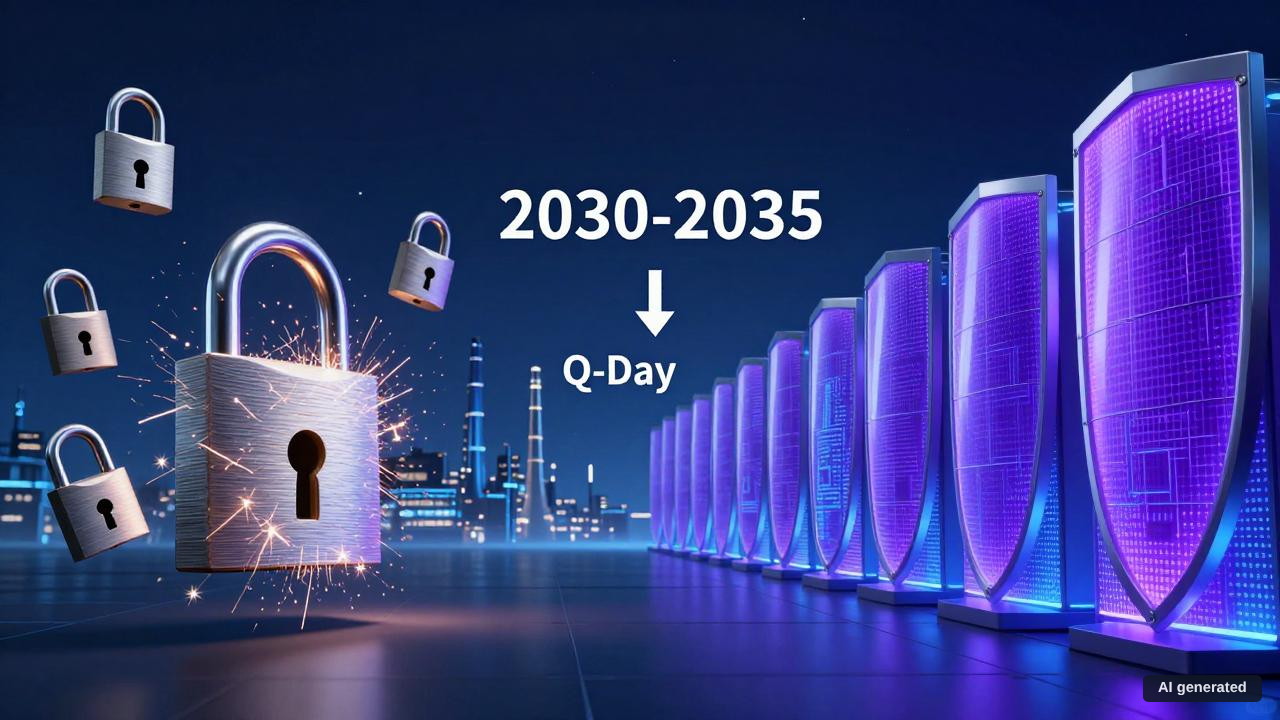
Q-Day: why should you prepare for post-quantum cryptography now?
Published: August 7, 2026 | Stéphane Rabette | Reading Time: ~10 minutes
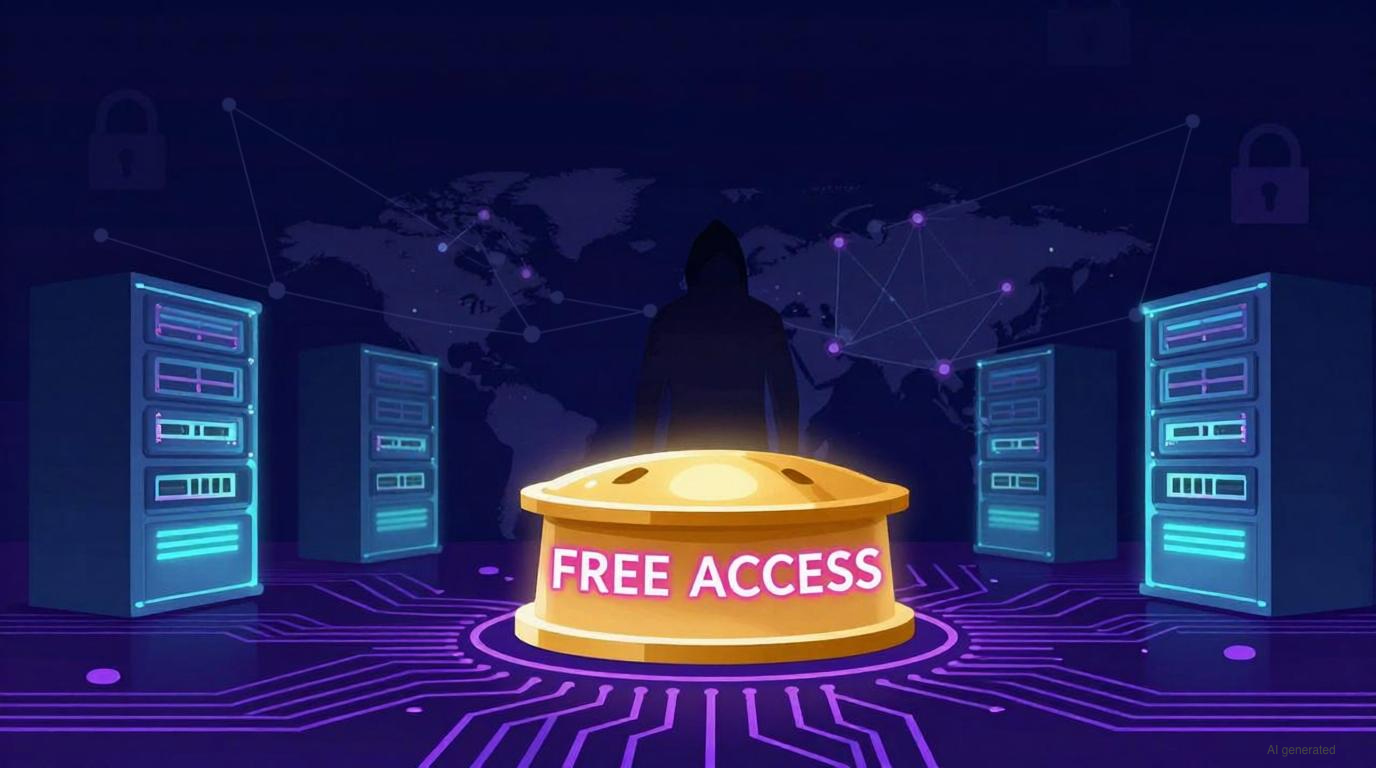
Cyber Deception deserves a seat in the SOC
Published: Sept 7, 2026 | Théo Turletti & Stéphane Rabette | Reading Time: ~5 minutes

Digital Twin: Would such technology help OT Cybersecurity?
Published: August 14, 2026 | Stéphane Rabette | Reading Time: ~8 minutes